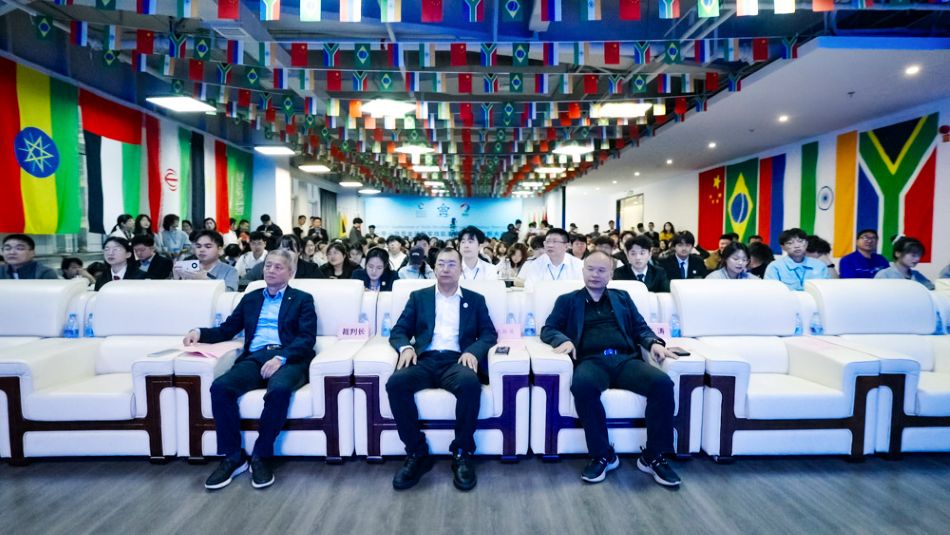
On the morning of April 3, the four‑day “2026 BBelt & Road and BRICS Competition of Skills Development and Technology Innovation – Technology Innovation Competition National Finals” came to a successful close in Xiamen. Dr. Liu Zhenying, Head of the China Working Group of Skills Development, Applied Technology and Innovation of the BRICS Business Council, Executive Chairman of the Competition Organizing Committee, and President of BRICS Academy of Skills Development and Technology Innovation (Xiamen); Chen Tao, Head of the Competition Group of the Education and Examination Center of the Ministry of Industry and Information Technology; and Dr. Peng Wei, Head Judge of the Technology Innovation Competition National Finals, attended the closing ceremony.
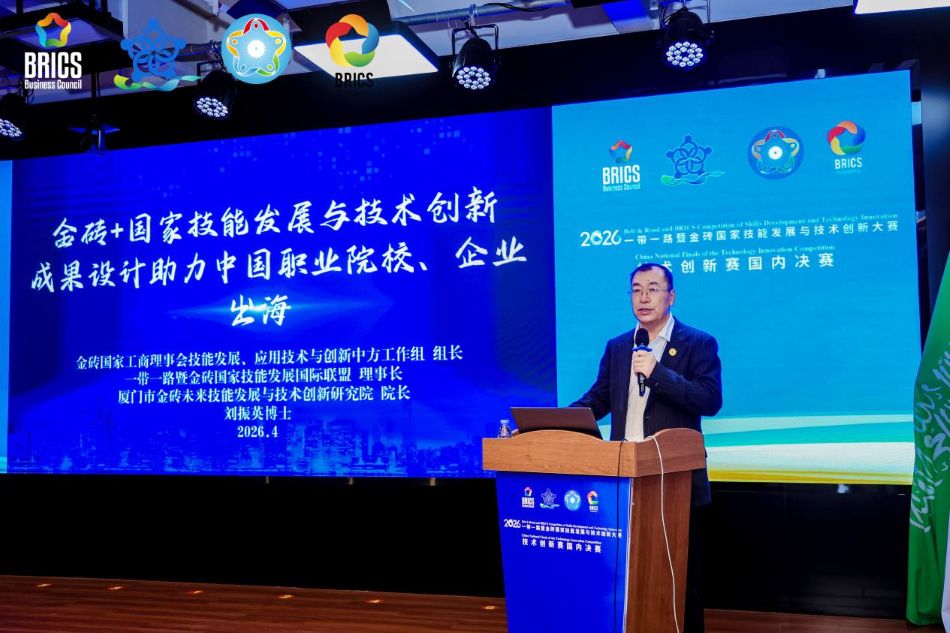
During the closing ceremony, Dr. Liu Zhenying congratulated the award‑winning participants and encouraged them. He noted that the successful hosting of this competition not only selected a number of high‑quality innovation achievements but also cultivated and reserved a group of high‑caliber innovative talents for technical exchange and cooperation among BRICS countries.
Professional Guidance: Head Judge’s In‑depth Commentary to Empower Project Upgrades
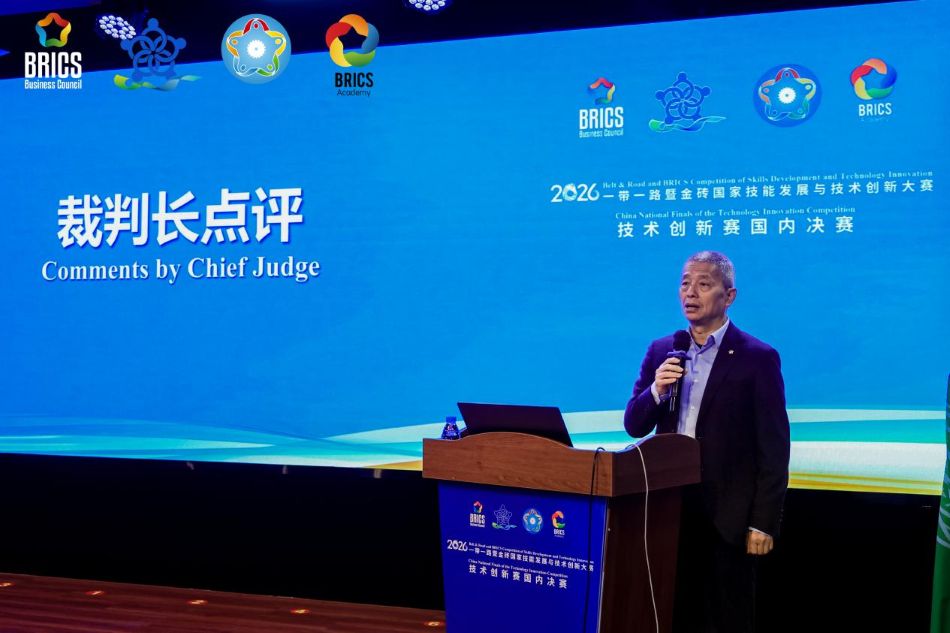
The competition invited domestic senior experts from academia, investment, and industrial consulting as judges. Leveraging their profound professional knowledge, the judges conducted in‑depth analysis and comprehensive evaluation of the participating projects. They also provided highly valuable professional advice on technology iteration and commercialization pathways, integrating current industrial development needs of BRICS countries.
In a key session of the closing ceremony, the Head Judge, drawing on reports from each judging group, provided detailed comments on the performance of each track.
• AI Integration and Application
Core performance: Projects covered algorithm optimization, embodied intelligence, smart livelihoods, etc., showcasing pragmatic innovation in “AI + industry.” Notably, embodied intelligent equipment achieved breakthroughs in complex scenarios such as underwater and mining operations, with large models closely integrated with domestic computing power ecosystems.
Expert summary: Overall high standard with solid industry‑academia‑research collaboration; it is recommended to strengthen business path planning, enhance empirical validation of core algorithms, and drive technology from lab to market.
• Green Energy and Carbon Neutrality
Core performance: Projects focused precisely on hydrogen energy, photovoltaics, and multi‑scenario smart energy management, with solutions that are both scientific and industrially valuable. The competition effectively promoted deep integration of green skills innovation with industrial demand.
Expert summary: The competition level has steadily risen, showing strong youth responsibility; further exploration of industrial implementation depth and optimization of solution design are needed to empower the “dual carbon” goals with technological innovation.
• Intelligent Advanced Manufacturing (Track 1 & 2 combined)
Core performance: Covered full‑chain innovation including core components, intelligent inspection, and specialized robots, with outstanding hard technology. Many vivid examples of the transition from “Made in China” to “Intelligent Manufacturing in China” emerged.
Expert summary: Demonstrated strong engineering practice ability and international collaboration vision; it is recommended to strengthen international technical standard deployment to achieve the leap from “innovation and creativity” to “technology commercialization.”
• Future Frontier Technology Exploration
Core performance: Gathered cutting‑edge fields such as biomedicine and new materials. Projects closely aligned with national strategies, had clear technical paths, and some already showed mature commercialization potential.
Expert summary: Highly innovative with prominent application value; participants are advised to continue refining technical details, deeply cultivate vertical application scenarios, and further improve solution feasibility.
• Space Information and Communication Technology
Core performance: Projects involved low‑altitude economy, remote sensing detection, digital twins, and other interdisciplinary fields. Individual projects have reached internationally advanced levels with broad commercial prospects.
Expert summary: Solid overall performance with strong technical innovation; maintain interdisciplinary advantages and accelerate the implementation of projects with industrialization potential.
• Digital Agriculture and Food Security
Core performance: Focused on pain points such as agricultural robots, drone operations, and smart livestock farming. Achievements iterated rapidly (some have reached the fifth generation), and many technologies have been promoted in Belt and Road projects.
Expert summary: Strong interdisciplinary integration and social responsibility; the expert group highly recognizes the technical support provided for rural revitalization, and expects continued deep cultivation to empower high‑quality agricultural development.
• Virtual Simulation and Metaverse
Core performance: Showed a deep convergence trend of “technology – application – value,” no longer limited to simple display. Strong industry‑education integration orientation, effectively empowering vocational skills improvement.
Expert summary: Core technology independent R&D still needs strengthening; it is recommended to further define track technical boundaries and standardize application processes to ensure resources are focused on works with substantial technological innovation.
• Ecological Protection and Resilient Cities
Core performance: Participants demonstrated a strong sense of responsibility for the times. Works focused on sustainable development and urban futures, showing solid research capabilities in ecological protection solutions.
Expert summary: Encourage moving from “technology silos” to real scenarios; it is recommended to strengthen economic feasibility analysis and cost‑benefit accounting, and improve solution universality and promotion value in iterations.
• Smart Government and Public Governance
Core performance: Projects focused on digital governance and government service optimization, covering hot topics such as low‑altitude traffic planning and smart elderly care. Roadshow logic was clear and practicality strong.
Expert summary: Well‑organized competition with outstanding featured projects; further strengthen scenario integration and promote technical exchanges and cooperation in public governance among BRICS countries.
• Digital Health and Healthcare
Core performance: Deep integration of AI imaging, wearable sensing, and big data, solving clinical pain points such as pathological sections and rehabilitation robots, demonstrating the leapfrog development of smart healthcare.
Expert summary: High interdisciplinary integration and broad international perspective; expect projects to continue refining achievements and contribute Chinese solutions to global digital health.
The Head Judge stated that the participating projects demonstrated deep engineering backgrounds and innovative foundations in their respective vertical fields. Many projects not only achieved multi‑source data fusion and full lifecycle management but also provided new paradigms for traditional industry upgrades. At the same time, experts offered professional advice on future technology refinement, user experience research, and “localization of technical parameters for BRICS countries,” encouraging participants to strengthen industry‑academia‑research linkages and promote deep integration of innovation and industrial chains.
Cutting‑Edge Tracks: Closely Aligned with Industrial Pulses and Focused on Industry Pain Points
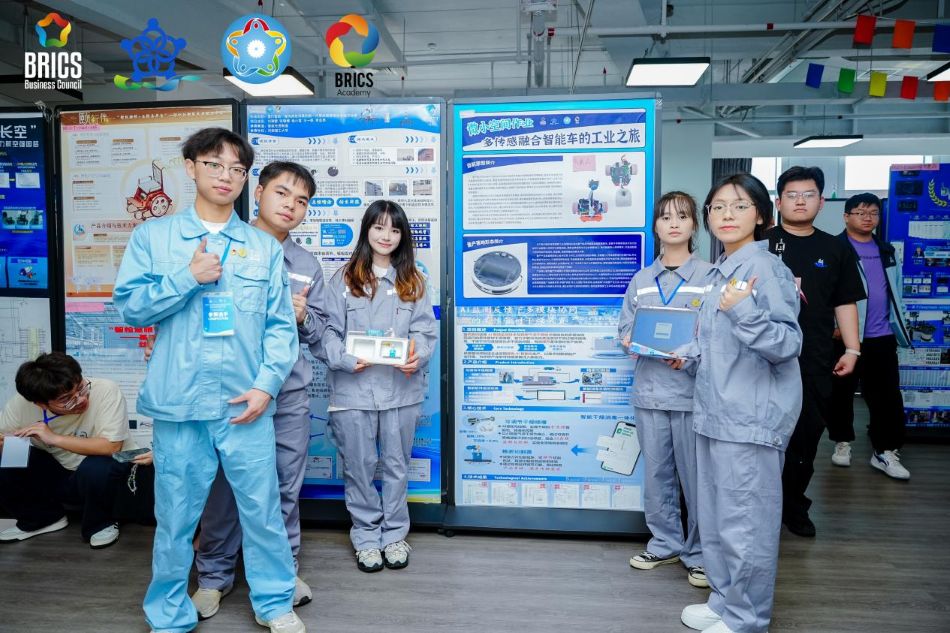
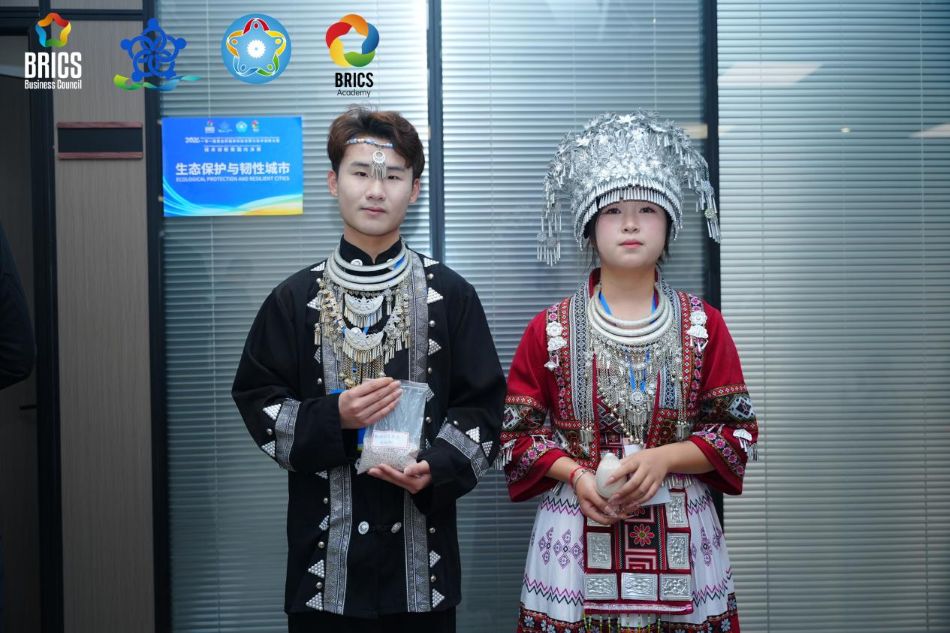
The Technology Innovation Competition featured ten tracks: Intelligent Advanced Manufacturing, Digital Health and Healthcare, Green Energy and Carbon Neutrality, AI Integration and Application, Virtual Simulation and Metaverse, Digital Agriculture and Food Security, Space Information and Communication Technology, Smart Government and Public Governance, Ecological Protection and Resilient Cities, and Future Frontier Technology Exploration. The participating projects closely followed global industrial transformation needs and cutting‑edge technology trends, demonstrating strong innovation and practicality while showing significant advantages in solving industry pain points and exploring market potential.
Exhibition Integrated with Competition: On‑site Brilliance and High Expert Praise
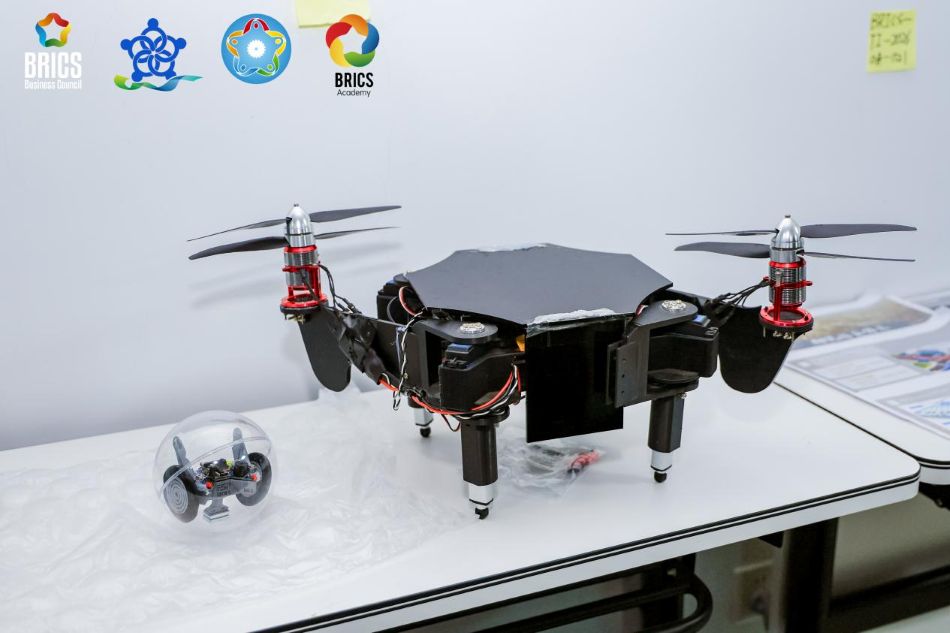
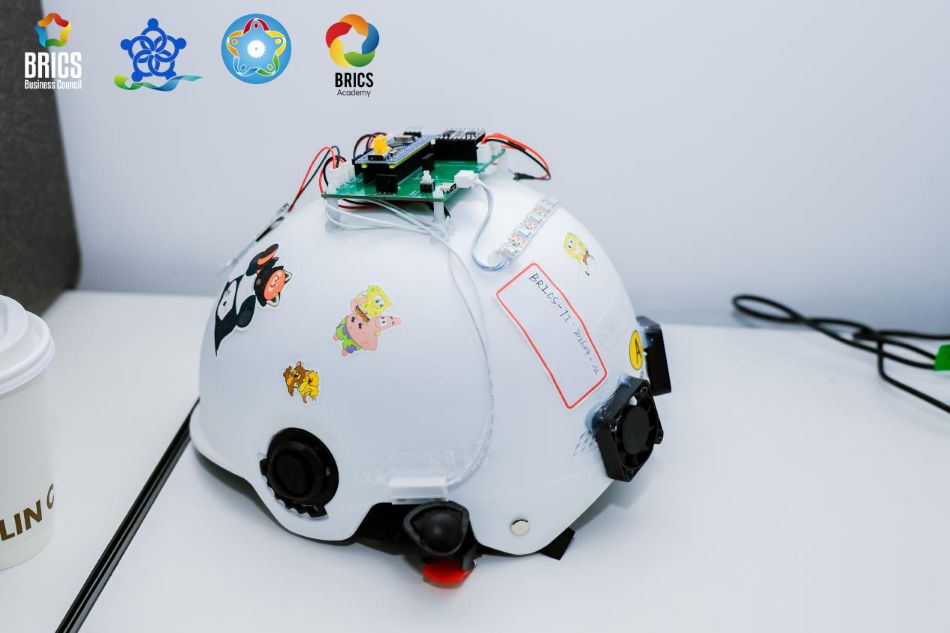
During the competition, the atmosphere was lively. Participants presented their technical solutions and application achievements through project roadshows, defense presentations, and prototype demonstrations, showcasing the vitality and responsibility of young talents in innovation and entrepreneurship in the new era. Expert judges conducted comprehensive evaluations from multiple dimensions including technological forward‑looking, implementation feasibility, social value, and industrialization potential, giving high praise to the professional level of the shortlisted projects.
As an important part of the competition, an innovation achievements exhibition was held simultaneously. Participating teams brought their developed prototypes for on‑site display and exchange, and judges provided point‑by‑point guidance and suggestions on technology refinement and scenario application, creating a positive atmosphere of “promoting research and improvement through competition.”
Moment of Glory: Nearly 70 Projects Win First Prize and Advance to the International Stage
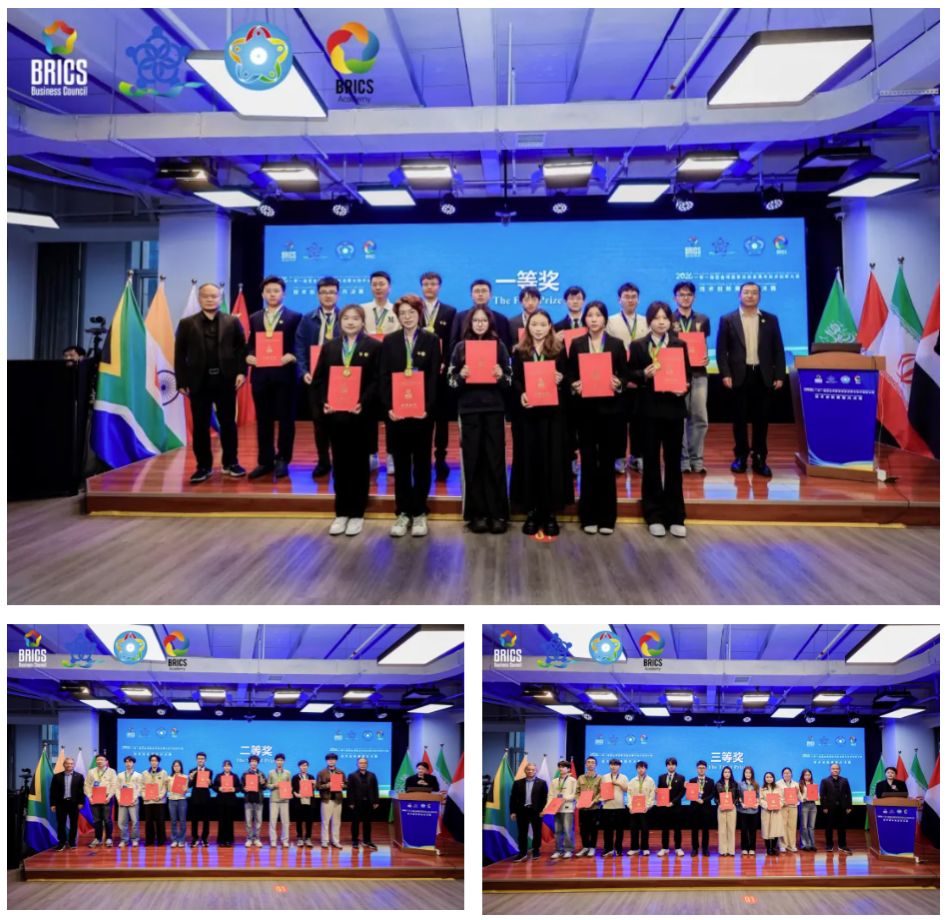
After two days of intense competition, nearly 70 outstanding projects stood out from 703 entries and won first prize. In 2026, the 10th Belt and Road & BRICS Skills Development and Technology Innovation Competition will feature seven international competition zones. Projects that won first or second prize in this national final will have the opportunity to represent China in the subsequent international competitions. There, the outstanding Chinese teams will compete with top participants from Brazil, Russia, South Africa, the Middle East, ASEAN, and Central Asian countries, expanding cooperation space on a broader international stage and jointly building a win‑win global innovation ecosystem.
Service Support: Young Volunteers Demonstrate Responsibility
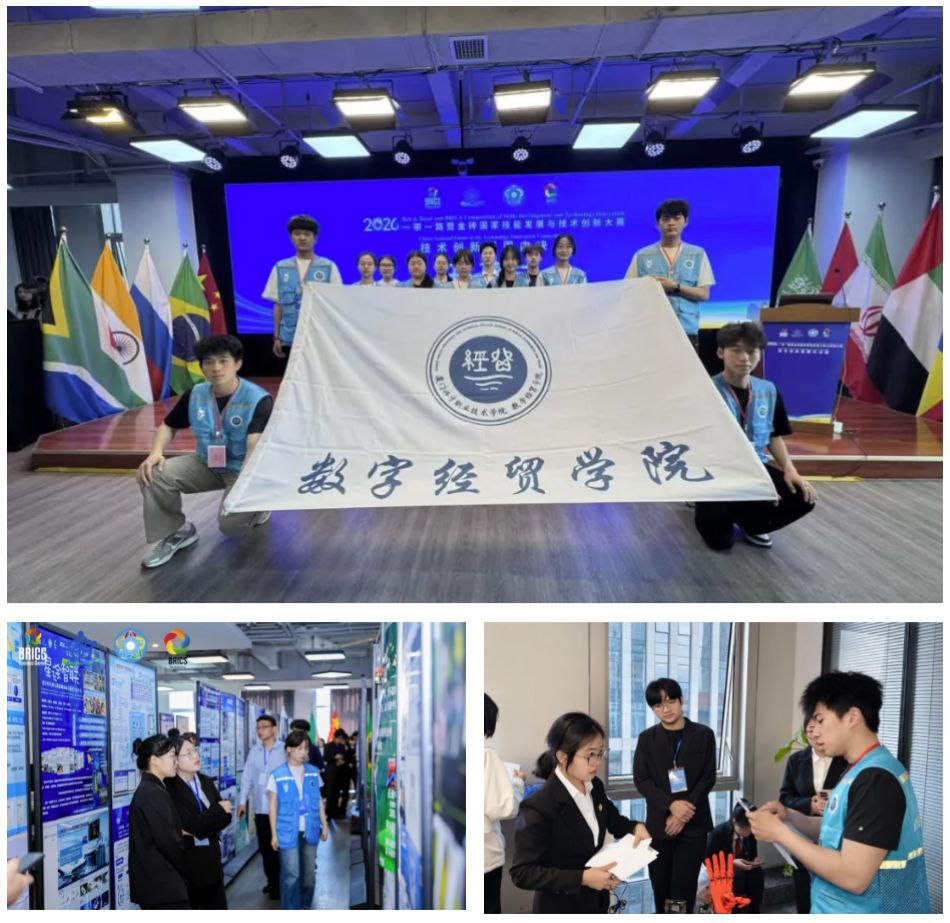
The smooth organization of this competition was inseparable from thorough logistical support. Fifteen student volunteers from the School of Economics and Trade of Xiamen Xingcai Vocational and Technical College took on various tasks including registration check‑in, waiting area guidance, on‑site assistance, and conference support. Their meticulous and considerate service and proactive collaborative spirit provided solid support for the competition, winning unanimous praise from guests and participants.
With the successful conclusion of the national finals, the seeds of technological innovation have taken root in the fertile soil of BRICS cooperation. In the future, the competition will continue to serve as a bridge, contributing to the high‑quality development of BRICS countries.
Related Reading
Recommended articles


Popular articles


 闽ICP备12331232468号-1